-(2).jpg?w=300&h=130)

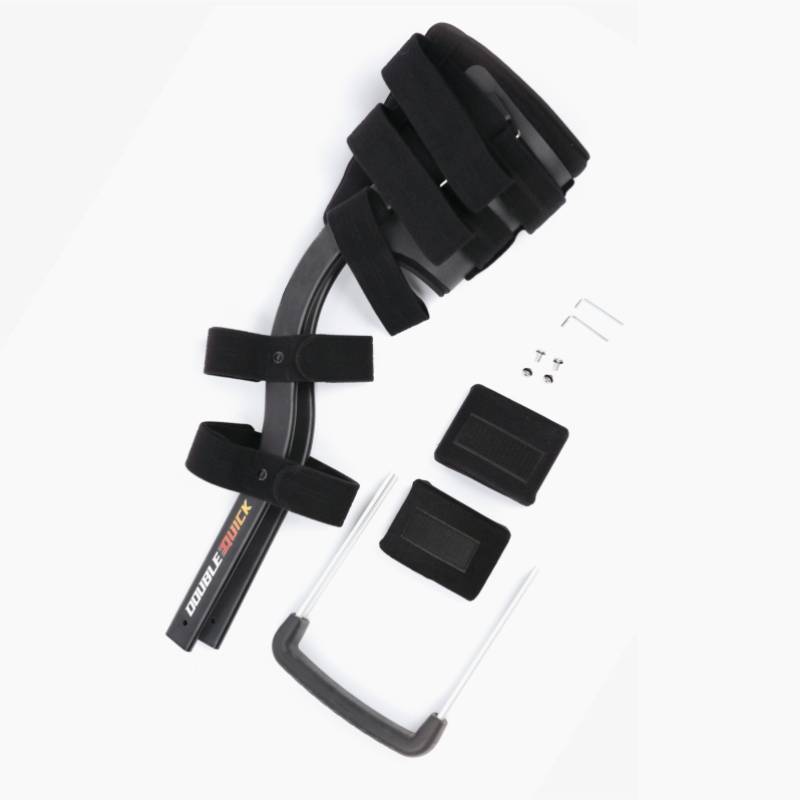
Being told to stay non-weight-bearing can turn everyday life upside down — weeks of hopping on one leg, sore hands and shoulders from crutches, and simple tasks like carrying a coffee suddenly out of reach. But recovery doesn't have to mean putting your life on hold. In this guide, we'll break down what NWB really means, how long it typically lasts, and the five things that truly matter when choosing a walking aid — plus how the DBG Healthcare Hands-Free Crutch was designed to meet every one of them, so you can heal without losing your freedom.
The Reality of Non-Weight-Bearing (NWB) Recovery
If your surgeon has told you to stay "non-weight-bearing (NWB)", you are not alone — it is one of the most common instructions in orthopedic recovery. Here is what it means, why it matters, and what challenges to expect.
What is NWB?
Non-weight-bearing (NWB) means the injured or operated leg must not touch the floor or support any body weight at all. Patients move around by "hopping" on the unaffected leg with crutches, a walker, or another mobility aid. The restriction exists for a reason: it protects healing bone and soft tissue and keeps surgical fixation — plates and screws — exactly where it needs to be.
Which injuries typically require NWB?
- Ankle fractures
- Achilles tendon repair
- Calcaneal (heel) fractures
- Lisfranc (midfoot) fracture-dislocations
- Tibial plateau fractures and other lower-limb surgeries
How long does NWB last?
Duration depends on the injury and its severity. Ankle fractures typically require up to 6 weeks of NWB . Achilles tendon protocols usually limit strict NWB to the first 2 weeks, followed by gradual progression to weight-bearing. More complex injuries take longer: calcaneal fractures may need 6–12 weeks, and post-operative Lisfranc protocols commonly prescribe 6 weeks of strict NWB before protected weight-bearing begins.
The hidden challenges of NWB recovery
NWB is harder than it sounds — and the difficulties go well beyond the injured leg:
- Muscle loss begins fast: just 4 weeks of NWB immobilization significantly reduces thigh and calf muscle size.
- Crutches shift the load to your upper body, causing abnormal, repetitive stress on the shoulders, wrists, and hands that can lead to secondary injuries.
- One study found that NWB ambulation with standard walking aids caused axillary, hand, or stance-limb pain in 68% of users.
- Everyday tasks become major obstacles: showering is unsafe while hopping on wet surfaces, driving is off-limits in a cast or boot, and carrying anything while on crutches is nearly impossible.
- For older or frail patients, prolonged NWB can trigger a spiral of bone loss, muscle weakness, falls, and further fractures.
Understanding these challenges is the first step toward managing them — with the right mobility strategy, recovery does not have to mean putting life on hold.
What Makes the Best Mobility Aid for Non-Weight-Bearing Recovery?
Choosing Your Walking Aid: 5 Things That Really Matter
Not all mobility aids are created equal. Crutches, walkers, knee scooters, and hands-free devices each have their place — but for NWB recovery, your aid needs to tick five boxes. Here is what to look for, and why it matters.
- It should free your hands.
Recovery lasts weeks, not days — and life doesn't pause.
You will need to cook, open doors, carry a cup of coffee, maybe even work. Traditional crutches demand both hands just to stay upright, which makes everyday tasks a juggling act .
A device that keeps your hands available changes recovery from "surviving" to actually living. - It must keep you truly non-weight-bearing.
This is non-negotiable: your injured foot cannot touch the ground, and your body weight needs to go somewhere else — your hands, your other leg, or the device itself . Any aid you choose has to maintain this completely; partial solutions risk your healing . - It needs to handle stairs.
Most homes have them. Yet knee scooters simply cannot go up or down stairs, leaving you stranded on one floor . With crutches, stair-climbing is possible but demands serious upper-body effort — research shows climbing stairs on crutches burns even more energy than walking on level ground, which is already about twice as tiring as normal walking . Whatever you choose, make sure stairs don't become a daily battle. - It should be comfortable enough for all-day wear.
NWB isn't a two-day affair — depending on your injury, you could be looking at 6 to 12 weeks . Crutch walking is surprisingly hard work: studies found it can raise your heart rate by over 50% compared to normal walking . Over weeks, that fatigue adds up. Comfort isn't a luxury; it's what keeps you moving (and healing) consistently. - It must work with your cast or walking boot.
After surgery, you'll likely spend weeks in a cast or a walking boot — bulky, awkward, and non-negotiable . Your mobility aid has to accommodate that extra bulk without rubbing, slipping, or forcing you into unsafe positions.
DBG Healthcare’s hands-free crutch was specifically designed around these five criteria.
The DBG Healthcare Hands-Free Crutch: Built for NWB Recovery
So what does a walking aid look like when it's designed around those five criteria? Meet the Hands-Free Crutch Telescopic Single-Leg Assisted Walking Aid from DBG Healthcare — built from the ground up for non-weight-bearing recovery.
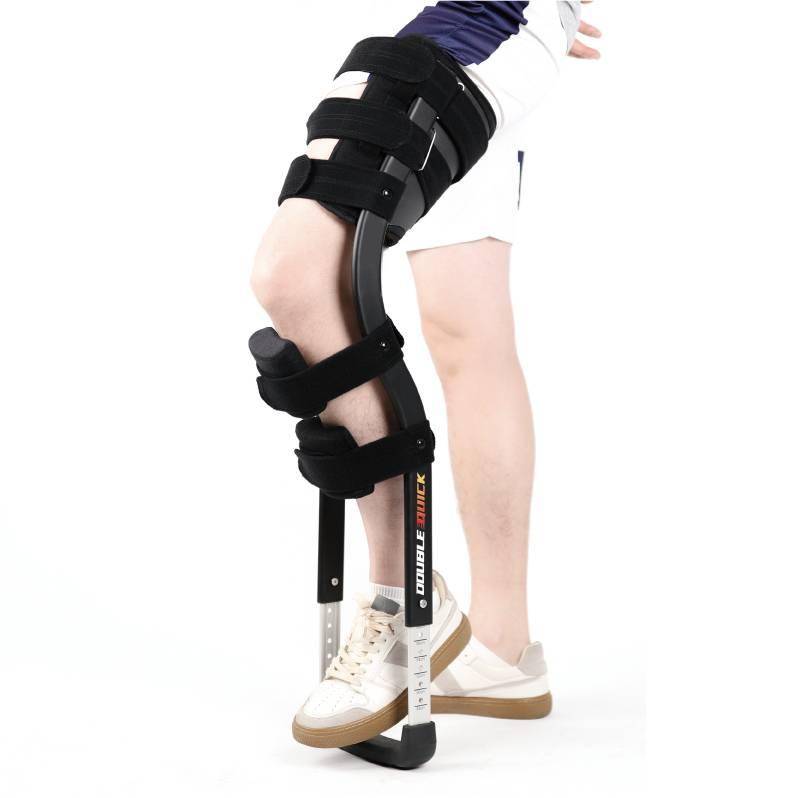
Zero-Load Suspension — True Non-Weight-Bearing Support
- How it works: The device suspends your injured leg entirely, transferring your body weight to your upper thigh instead.
- vs. traditional crutches: Standard crutches channel weight through your armpits and arms; the DDM-G01 bears load through the thigh — no upper-body strain.
- Clinical significance: Your foot never touches the ground, achieving the "complete non-weight-bearing" your doctor ordered.
Hands-Free Freedom — Get Your Life Back
- Both hands fully released: Carry a coffee, open doors, cook, hold your child, type at work — all while moving.
- vs. traditional crutches: No more "put crutches down → do the task → pick crutches back up" cycle.
- Picture this: Two weeks post-op, you make your own coffee, walk to the kitchen to fix a sandwich, and answer the door for a delivery — everyday moments nearly impossible on standard crutches, back within reach.
Stair-Capable — Go Where Knee Scooters Can't
- Climb stairs step by step: Both hands stay free to grip the railing.
- vs. knee scooters: Scooters simply cannot go up or down stairs at all.
- Why it matters: If you live in a multi-story home, there's no need to relocate to the ground floor or buy a second device.
Lightweight Aerospace Aluminum — 1,580 g for All-Day Wear
- Material: Aerospace-grade aluminum alloy — light without sacrificing strength.
- Weight: Just 1,580 g, lighter than a typical pair of crutches.
- Ergonomic curved design: Keeps your center of gravity stable and reduces extra strain on your back and sound leg.
Telescopic Adjustable Design — Fits Your Body
- Adjustable range: Thigh circumference 49–65 cm; lower-leg length 48–58 cm.
- Unisex fit: One design for men and women.
- Adapts through recovery: Adjusts even as post-surgical swelling changes — one device for the whole journey.
- Everything in the box: Support frame, foot platform, adjustable straps, foam padding, and hex wrench.
Compatible with Casts, Boots, and Braces
- Works with your existing gear: Plaster casts, walking boots, ankle stabilizers, and splints — no removing or swapping equipment.
- Why it matters: Post-surgical patients are almost always in one of these; your mobility aid should fit around them, not fight them.
Frequently Asked Questions
Still on the fence? Here are the questions we hear most from people recovering from lower-leg injuries.
Q: Is the hands-free crutch safe for non-weight-bearing recovery?
Yes — the hands-free crutch fully suspends your injured leg and transfers your body weight to your upper thigh, achieving true non-weight-bearing status.
As with any mobility aid, check with your doctor or physical therapist before use to confirm it suits your specific injury.
Q: Can I use it after ankle surgery?
Absolutely. It's suitable after ankle fracture surgery, Achilles tendon repair, foot surgery, and similar procedures.
It works together with your post-op walking boot — no need to remove or replace anything.
Q: Can I walk up and down stairs with it?
Yes. Because your hands stay free, you can hold the railing while climbing or descending stairs — something a knee scooter simply can't do.
Q: Will it fit my leg?
The telescopic design fits thigh circumferences of 49–65 cm and lower-leg lengths of 48–58 cm — a unisex fit for most adults.
Tip: measure twice — once standing, and once sitting with your knee bent at 90 degrees — to confirm your size.
Q: How long does it take to learn?
Most users build a basic gait in about 20–30 minutes.
Confident, independent walking typically takes 1–3 days of practice.
Every order includes access to our How to Use video tutorial to guide you step by step.