-(2).jpg?w=300&h=130)

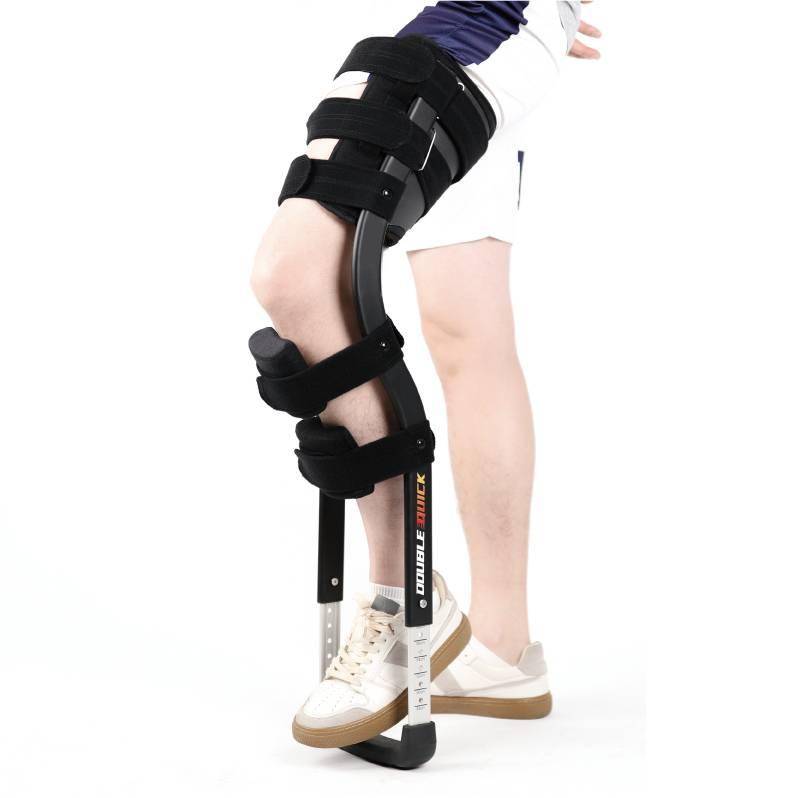
The best alternative to crutches depends on more than your injury. Use this guide to match the right mobility aid to your weight-bearing instructions, home, daily routine, balance, and budget.
What Can I Use Instead of Crutches: 6 Crutch Alternatives at a Glance
Before you dive into all the details, here is a simple side‑by‑side look at six common alternatives to traditional crutches.
|
Alternative |
Hands-Free |
Can Use Stairs |
Suitable for Strict NWB |
Weight-Bearing Area |
Best For |
|
Hands-Free Crutch (DBG) |
✓ |
✓ |
✓ |
Thigh / hip |
Independent daily living and stair use |
|
Knee Scooter |
✕ |
✕ |
✓ |
Knee |
Fast, comfortable movement on flat indoor surfaces |
|
iWALK-Style Knee Crutch |
✓ |
Use with caution |
✓ |
Knee |
Short-term tasks and active users |
|
Walker |
✕ |
✕ |
Depends on the model and prescription |
Both hands / arms |
Older adults or people with limited balance |
|
Wheelchair |
✕ |
✕ |
✓ |
Seat |
Longer distances and reducing physical effort |
|
Forearm Crutches |
✕ |
Use with caution |
Often better for partial weight-bearing |
Both hands / arms |
Longer-term use and selected stair situations |
Look closely at the “Weight-Bearing Area” column. Knee-supported devices, such as knee scooters and iWALK-style knee crutches, transfer body weight through the knee. They may be practical for short-term use, but may be less suitable if knee discomfort, knee problems, or prolonged use is a concern.
If you need all three of the following at the same time:
- hands free for daily tasks
- the ability to go up and down stairs,
- and strict non‑weight bearing on your injured foot or ankle,
then a hands-free thigh-supported crutch is currently the only solution that ticks all three boxes.
If your surgeon has told you to stay non-weight bearing (NWB), make sure you understand exactly what that means and why it matters for healing. Read our guide to NWB mobility here: Best Mobility Aid for Non-Weight-Bearing Recovery.
Best Alternative to Crutches: Stay Independent After a Lower-Leg Fracture
A lower-leg fracture or foot and ankle surgery can make everyday life feel unexpectedly complicated. Crutches may keep weight off your injured leg, but they can also make it hard to carry things, climb stairs, protect your arms, or stay comfortable for more than a few minutes.
The best alternative to crutches is not necessarily the easiest device on a flat floor. It is the one that fits your weight-bearing instructions, your home, your daily routine, and the parts of your body you need to protect during recovery.
How to Carry Things With Crutches, and When Hands-Free Mobility Helps
The hardest part of crutches is often not walking. It is trying to do normal life while both hands are occupied.
A glass of water, a bowl of food, a laptop, a package at the door, or a handrail on the stairs can suddenly become a challenge. You can use a backpack, oversized pockets, a cross-body bag, or a travel mug with a lid. Those workarounds may help, but they do not truly give you your hands back.
Standard crutches and forearm crutches both depend on your arms for support and control. A knee scooter can reduce the pressure on your hands, but you still need at least one hand on the handlebar while moving. It is great for traveling across a flat floor, but less helpful when you need to carry something at the same time.
A hands-free crutch is built for a different kind of independence. By supporting the injured lower leg off the ground, it can leave your hands available for everyday tasks—holding a rail, opening a door, preparing food, carrying a drink, or picking up a delivery.
For patients who must remain strictly non-weight bearing, hands-free mobility is not just about convenience. It can make it easier to function independently at home.
How to Climb Stairs With a Hands-Free Crutch Safely
A mobility device can seem perfect until you reach the stairs.
This is where many crutch alternatives become less practical. A knee scooter can be quick and comfortable on a smooth, level floor, but it cannot safely roll up or down a staircase. A wheelchair can reduce effort over longer distances, but it does not solve stairs unless your home is accessible or another person can help.
Crutches can be used on stairs, but anyone who has tried it knows that it takes balance, arm strength, confidence, and a safe technique. You need to keep the injured foot off the floor while managing the crutches and, ideally, holding a handrail.
For non-weight-bearing patients, hospital guidance commonly recommends using a handrail where possible and learning a specific stair technique from a physiotherapist.
A hands-free crutch can offer an advantage in a suitable environment because both hands may be available for railings. But it is not a shortcut or a reason to skip training.
If your bedroom, bathroom, entrance, or kitchen involves stairs, make stair access one of your first mobility-device questions—not an afterthought.
Crutches Hurt My Armpits, Wrists, and Shoulders: Is There a Better Option?
If your crutches hurt your armpits, wrists, or shoulders, more padding may not be the real answer. The problem is often not just the handle or underarm pad—it is the amount of body weight your upper body has to manage every day.
With standard crutches, your hands, wrists, arms, shoulders, and upper back repeatedly help support and control your body weight. That may be manageable for a short walk across a room. It becomes much harder when you are doing it dozens of times a day for several weeks.
Medical research has reported nerve, muscle-and-joint, and blood-vessel problems associated with crutch use. Incorrect fitting and poor technique can make those risks worse. This does not mean that crutches are unsafe for everyone. It does mean that pain, numbness, tingling, bruising, or weakness should not be ignored.
A knee scooter, wheelchair, or hands-free device can reduce how much body weight travels through your hands and arms. Each option has a different trade-off. A scooter is easier on level ground but cannot handle stairs. A wheelchair reduces walking effort but needs enough space and an accessible route.
A hands-free crutch is designed to reduce constant upper-body loading while still allowing you to stand and move around. Instead of repeatedly treating the symptoms with extra padding, wrist supports, or hand grips, consider whether a different mobility device would better match your recovery and daily routine.
If you develop persistent arm pain, altered sensation, weakness, or swelling, contact your healthcare professional for advice.
Do Knee Scooters Hurt Your Knees? Compare Knee-Supported and Thigh-Supported Crutch Alternatives
Not every alternative to crutches supports your body in the same way.
Knee scooters and iWALK-style devices can be useful options for selected foot and ankle injuries. Both can keep pressure off the injured foot or ankle, and both can reduce the demand that standard crutches place on the hands, wrists, and shoulders.
However, they do this by making the knee a central part of the support system.
With a knee scooter, you rest the injured leg on a padded knee platform and push with the uninjured leg. With a knee-mounted hands-free device, you kneel into a support system. Some users find this stable and comfortable. Others may find prolonged kneeling uncomfortable, especially if they already have knee pain, a history of knee injury, limited balance, reduced knee flexibility, or difficulty maintaining a kneeling position.
A thigh-supported hands-free crutch takes a different approach. Instead of placing the injured leg on a knee platform, it allows you to stand and move without kneeling into the device. For a patient who needs strict non-weight bearing, wants both hands available, needs to manage stairs, or does not want prolonged pressure through the knee, that difference can matter.
Medical note: Your mobility aid should match your surgeon’s or physiotherapist’s instructions. Your non-weight-bearing restriction, balance, upper-body strength, knee health, home layout, and type of injury or surgery can all affect which option is appropriate. Stop using a device and seek clinical advice if you experience new pain, numbness, tingling, weakness, dizziness, or a fall.
Which Alternative Is Best for Your Injury and Daily Routine?
Choosing the right alternative to crutches is not only about your diagnosis. It also depends on what your daily life requires while you recover.
A patient recovering from an ankle fracture in a single-level apartment may prefer a knee scooter. A patient with the same injury in a multi-story home may need a hands-free crutch for stairs. Someone caring for young children may prioritize hands-free movement, while an older adult with balance concerns may need the stability of a walker or rollator.
Use the first table to narrow your options based on your injury. Then use the second table to match the device to your home, routine, and physical ability.
- Table 1: Match the Device to Your Injury
|
Injury or Recovery Situation |
Common Weight-Bearing Need |
Recommended Device to Discuss |
Why It May Fit |
|
Achilles tendon rupture |
Often includes an early protected or non-weight-bearing phase |
Hands-free crutch plus knee scooter |
A hands-free crutch may help with short daily tasks and clinician-approved stairs; a knee scooter can reduce effort on flat floors |
|
Ankle sprain or ankle injury |
May range from partial weight bearing to strict non-weight bearing |
Hands-free crutch or knee scooter, depending on severity |
A knee scooter may work for flat floors; a hands-free crutch may be more useful for daily tasks and stairs |
|
Ankle fracture |
Often requires a period of limited or non-weight bearing |
Hands-free crutch as a possible primary home device |
May help patients who need both hands available and must keep weight off the injured ankle |
|
Foot fracture |
Often requires keeping pressure completely off the foot |
Hands-free crutch plus knee scooter |
The scooter can cover flat floors; the hands-free crutch may help with narrow spaces, carrying essentials, and stairs |
|
After foot surgery |
Frequently includes a defined non-weight-bearing period |
Hands-free crutch, if clinically approved |
May support daily independence while keeping the foot off the floor |
|
Knee injury or knee pain |
May make kneeling or knee pressure uncomfortable |
Wheelchair or walker, depending on your weight-bearing status |
Avoids sustained pressure through an injured, painful, stiff, or recently operated-on knee |
|
Early recovery after knee surgery |
Walking may be limited or not allowed |
Wheelchair |
May be safer when you cannot walk safely or tolerate kneeling |
|
Later recovery after knee surgery |
May progress to partial weight bearing |
Forearm crutches, if prescribed |
May fit once your surgeon allows weight through the leg and confirms the knee can tolerate the movement |
|
Lower-leg injury below the knee |
May require strict non-weight bearing |
Hands-free crutch plus knee scooter |
A hands-free crutch may help with short trips and daily tasks; a scooter can help on smooth, flat surfaces |
- Table 2: Match the Device to Your Daily Life
|
Your Situation |
Recommended Device |
Why It May Fit |
|
Multi-story home with stairs |
Hands-free crutch |
May allow you to keep both hands available for railings while keeping the injured foot off the floor |
|
Single-level apartment |
Knee scooter |
Fast, comfortable, and less demanding on smooth, flat floors |
|
Caring for young children |
Hands-free crutch, if clinically approved |
Can leave your hands more available for everyday caregiving tasks |
|
Long commute or office job |
Wheelchair plus hands-free crutch |
A wheelchair can save energy over longer distances; a hands-free crutch may help with short indoor movement and daily tasks |
|
Elderly or significant balance concerns |
Walker or rollator, if prescribed |
Provides a larger base of support and may feel more stable than crutches |
|
Active lifestyle or frequent errands |
Hands-free crutch, if clinically approved |
May be more versatile for short trips, narrow spaces, carrying essentials, and clinician-approved stairs |
|
Long distances outdoors |
Wheelchair |
Can reduce the physical effort of repeated crutch walking |
|
Small kitchen or narrow home layout |
Hands-free crutch |
May be easier to use in tight spaces where a scooter or wheelchair is difficult to turn |
|
Need to carry drinks, food, or work items |
Hands-free crutch |
Designed to keep your hands more available for daily tasks while the injured leg remains supported |
The most practical answer is often a combination. For example, you might use a wheelchair for longer, flat distances and a hands-free crutch for short daily tasks, stairs, or places where a rolling device cannot go.
Once you have matched a mobility aid to your injury and daily routine, the next question is timing. Recovery rarely stays the same from week to week: many patients move from strict non-weight bearing (NWB) to toe-touch (TTWB), partial weight bearing (PWB), and eventually full weight bearing (FWB)—but the exact schedule depends on your injury, surgery, and surgeon’s protocol. The device that feels right in week one may not be the best choice in week six.
Medical note: A mobility aid should support your recovery plan, not replace it. Stop using a device and contact your healthcare professional if you develop new pain, numbness, tingling, weakness, dizziness, swelling, or if you fall.
What Do Hands-Free Crutch Cost?
Price of DBG Hands-Free Crutch: 209USD
The DBG Hands-Free Crutch is designed for below-knee injuries that require non-weight-bearing mobility. It keeps the injured foot off the ground, avoids a kneeling platform, and leaves both hands available for daily tasks. The adjustable design is made to work with many casts, walking boots, and braces.
DBG Healthcare offers free worldwide shipping on all products, making the listed price easier to compare with the final cost of other devices. Before ordering, check the current size range and confirm with your surgeon or physiotherapist that a hands-free device is appropriate for you.